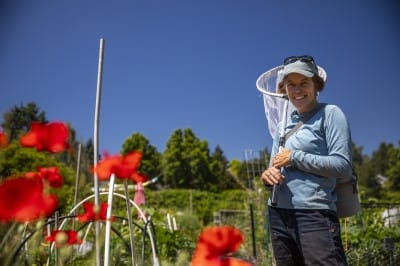
Researchers at the University of Washington are using “functional resurvey” experiments to study how organisms evolve and adapt over time. These experiments involve repeating studies conducted decades ago to compare past and present data on biological functions and species behavior.
Lauren Buckley, a biology professor at the university, explains that this approach helps scientists identify changes in organisms caused by environmental shifts, climate change, and other factors. By analyzing differences across time, researchers gain insights into the mechanisms driving evolutionary and ecological transformations.
**Why this matters**
Repeating long-term experiments provides valuable data on how species respond to changing conditions, which is essential for predicting future ecological impacts. This knowledge can inform conservation strategies and improve understanding of biodiversity resilience in the face of global environmental changes.
Source: NewsData