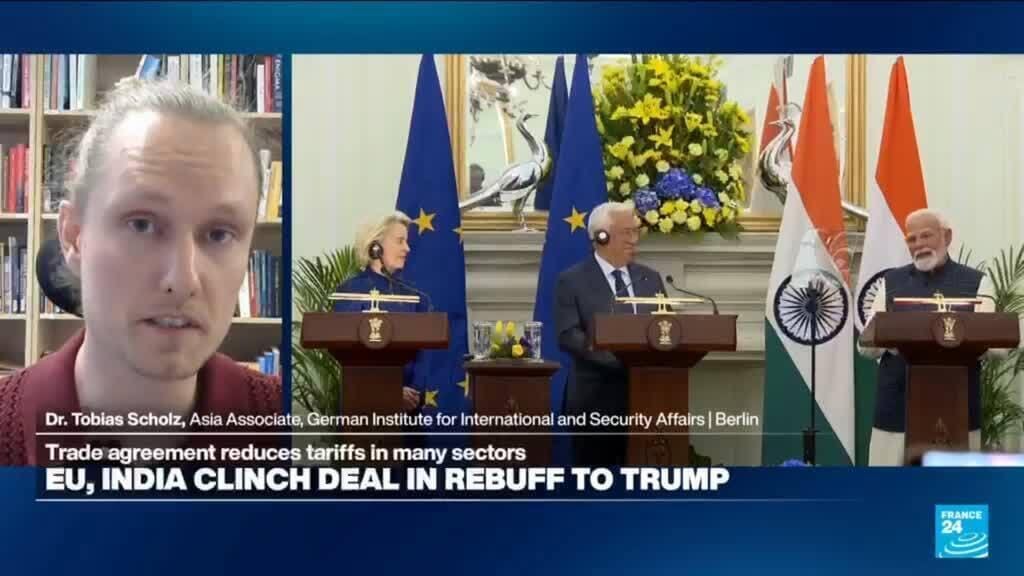
After nearly two decades of intermittent talks, the European Union and India have signed a trade agreement that now awaits ratification. This development comes amid significant geopolitical shifts, including Russia’s ongoing war in Ukraine, rising economic protectionism, and changing global partnerships. These factors have prompted both the EU and India to reassess their strategic and economic ties.
Unlike the previously stalled Mercosur deal, the EU-India agreement has gained momentum, partly because it excludes sensitive agricultural products. Additionally, India’s increasing economic and political influence has contributed to stronger support for the pact. Experts note that the deal reflects a broader realignment as both parties seek to strengthen their positions in a complex international environment.
**Why this matters**
The EU-India trade agreement highlights how global conflicts and economic trends are reshaping international relations. By deepening cooperation, the EU and India aim to secure mutual benefits and reduce dependence on other major powers. This pact could influence future trade negotiations and signal a shift away from traditional power dynamics in global trade and diplomacy.
Source: NewsData