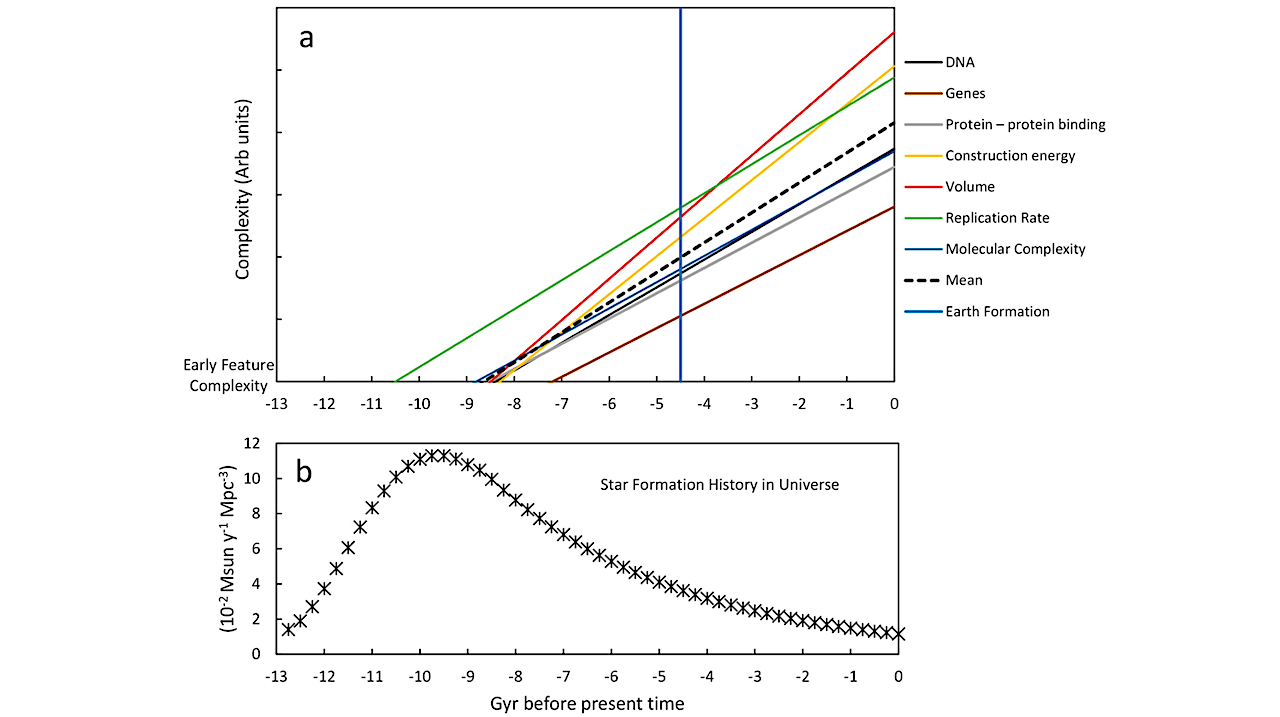
Scientists have long sought to determine when life first emerged on Earth, with many estimates placing its origin around 4 billion years ago. This timeline suggests that the intricate molecular systems involving RNA, DNA, proteins, and lipid membranes developed relatively quickly after the planet cooled. Researchers are exploring whether analyzing trends in the increasing complexity of organisms can provide insights into the timing of life’s emergence.
By examining the growth patterns of biological complexity, scientists aim to better understand the processes that led to the formation of fundamental cellular structures. This approach could help clarify the conditions and timeframe necessary for life to originate and evolve on early Earth.
**Why this matters**
Understanding when and how life began is crucial for fields such as astrobiology and evolutionary biology. It informs the search for life beyond Earth and sheds light on the fundamental mechanisms that drive biological complexity. Insights into the timing of life’s origin also help contextualize Earth’s early environment and the factors that made it hospitable for living organisms.
Source: NewsData