Overview
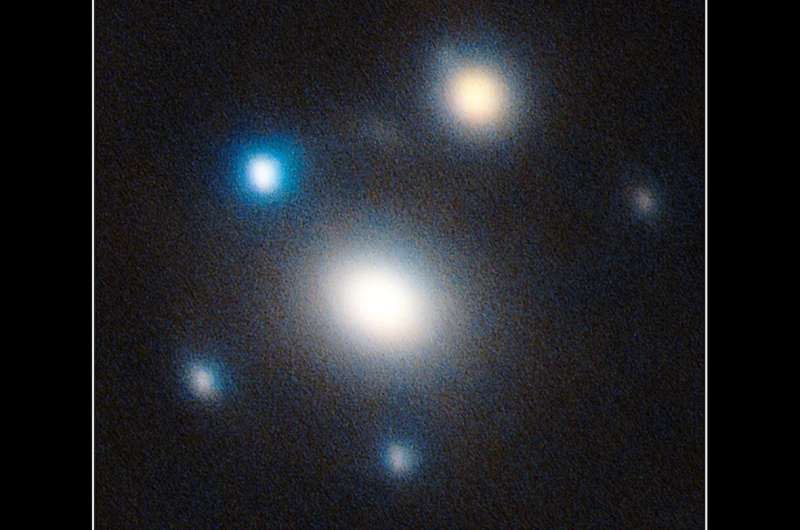
The rate at which the universe is expanding, known as the Hubble constant, remains a critical question in cosmology. Recent observations of a specific type of supernova may provide new insights into this measurement. Scientists use supernovae as standard candles to gauge cosmic distances and calculate the expansion speed. However, discrepancies between different measurement methods have led to ongoing debates. This new supernova data could help reconcile these differences or suggest new physics beyond current models, offering a clearer understanding of the universe’s growth over time.
Key Points
Supernovae, particularly Type Ia, serve as reliable distance indicators in cosmology. The Hubble constant quantifies the universe’s expansion speed but has varying values depending on measurement techniques. Current tensions exist between values derived from the cosmic microwave background and those from supernova observations. The recent supernova under study may provide more precise data to refine the Hubble constant. Improved measurements could impact theories about dark energy, cosmic evolution, and fundamental physics.
Background
The expansion of the universe was first observed by Edwin Hubble in the early 20th century, leading to the formulation of the Hubble constant. Over the decades, advancements in technology and observational methods have refined this measurement. Type Ia supernovae became essential tools due to their consistent intrinsic brightness, allowing astronomers to estimate distances accurately. Despite progress, discrepancies remain between measurements obtained from early-universe observations, like the cosmic microwave background, and those from late-universe indicators such as supernovae. Resolving this tension is crucial for validating existing cosmological models or indicating the need for new theories.
Detailed Analysis
The recent supernova observation provides high-quality data that may bridge the gap between divergent measurements of the Hubble constant. By analyzing the light curves and spectra of this supernova, researchers can improve the calibration of distance measurements. This, in turn, could reduce uncertainties that have contributed to the existing tension in expansion rate estimates. Additionally, the analysis considers potential systematic errors and explores alternative explanations if discrepancies persist. The findings could either reinforce the standard cosmological model or prompt revisions to our understanding of cosmic physics.
Why It Matters
Determining the precise rate of the universe’s expansion has far-reaching implications for cosmology and physics. It affects estimates of the universe’s age, the nature of dark energy, and the fate of cosmic evolution. Resolving the current discrepancies between measurement methods can validate or challenge the prevailing Lambda-CDM model. Furthermore, accurate expansion rates inform other areas of astrophysics, such as galaxy formation and large-scale structure development. Ultimately, this research contributes to a deeper understanding of fundamental forces shaping the cosmos.
Conclusion
The study of this newly observed supernova represents a significant step toward resolving the ongoing debate over the universe’s expansion rate. While further analysis and additional data are necessary, the findings offer promise for refining the Hubble constant measurement. Achieving consensus on this value is essential for advancing cosmological theories and enhancing our comprehension of the universe’s history and future. Continued research in this area will be pivotal in addressing fundamental questions about the cosmos and potentially uncovering new physics.