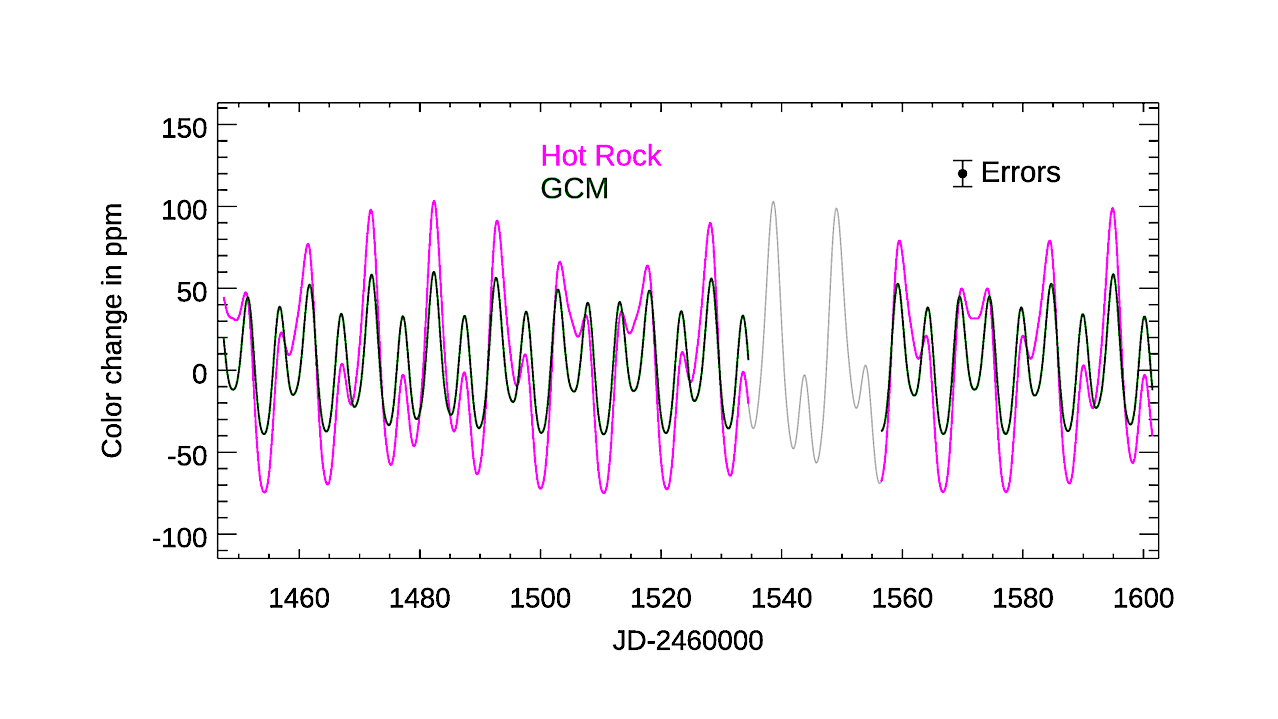
Detecting and analyzing the atmospheres of rocky exoplanets remains a significant challenge for the James Webb Space Telescope (JWST). Traditional methods like transit spectroscopy, particularly for the TRAPPIST-1 system, have been complicated by stellar activity such as spots and faculae on the host star. While secondary eclipse observations have revealed hot rocky surfaces, confirming the presence of atmospheres has been difficult.
A new approach involves using color phase curves, which track changes in the planet’s reflected light at different wavelengths as it orbits its star. This method offers an alternative way to characterize the atmospheres of temperate rocky exoplanets, potentially overcoming some limitations faced by previous techniques.
**Why this matters**
Understanding the atmospheres of rocky exoplanets is crucial for assessing their habitability and potential for hosting life. Developing reliable methods to detect and study these atmospheres will enhance our knowledge of planet formation and the diversity of planetary environments beyond our solar system.
Source: NewsData